


Brussels, March 25, 2026 – The Future 500 – Champions of Growth conference brought together policymakers, investors, entrepreneurs, and scientists in Brussels to address one of Europe’s most pressing questions: how to scale companies and strengthen competitiveness in practical, actionable terms.
Organized by IEDC – Bled School of Management and the Atlantic Council, in partnership with the European Economic and Social Committee (EESC), the conference convened more than 300 participants representing Europe’s capital markets, business sector, public policy, and innovation ecosystems.

A clear conclusion emerged from discussions: Europe possesses the essential ingredients, including entrepreneurs, scientists, capital, talent, and ideas, but continues to face challenges in focus, coordination, and execution.

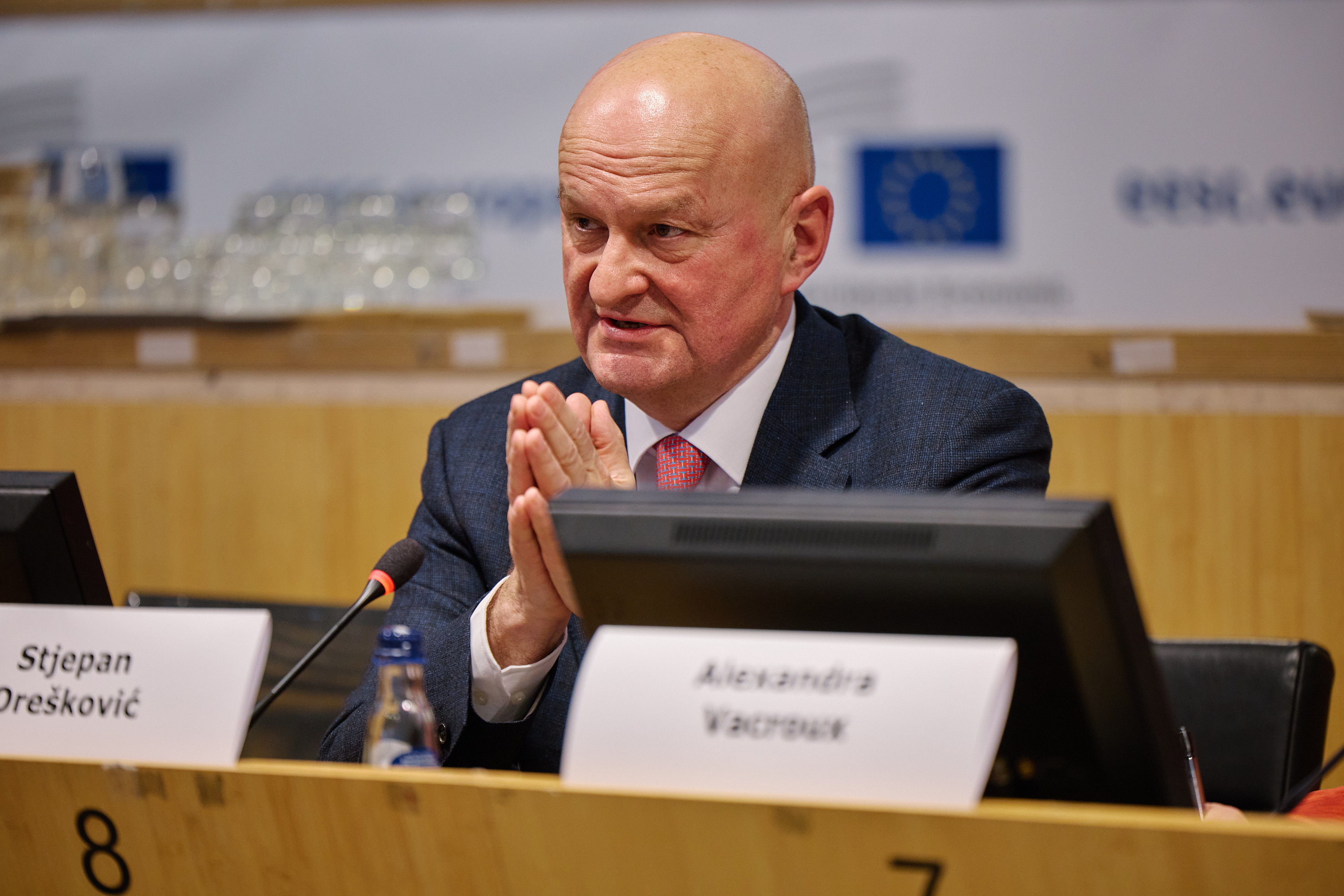
Opening the conference, Stjepan Orešković, Founder of Future 500 and Bosqar Invest, cautioned that Europe risks falling behind if it does not create global champions. Despite its substantial capital and savings, Europe often lacks the decisiveness required to deploy them effectively. He warned that allocating hundreds of billions of euros from competitiveness funds to preserve legacy structures rather than build the future could become Europe’s greatest strategic failure. At the same time, he emphasized that entrepreneurs, scientists, and breakthrough technologies remain the true engines of growth.
Peter Grk, Secretary General of the Bled Strategic Forum, described Europe as being at a “precarious moment,” while also recognizing a visible shift toward action. Jörn Fleck of the Atlantic Council reinforced this message, noting that Europe’s strong fundamentals must now translate into delivery: “It is up to all of us to turn potential into execution.”

Maria Luís Albuquerque, European Commissioner for Financial Services, highlighted that Europe’s challenge is not a lack of capital, but a lack of scale. She pointed to the Savings and Investments Union as a critical step toward building deeper and more liquid capital markets across the EU.
Panel discussions explored structural barriers in greater depth. Peter Bosek, CEO of Erste Group, observed that while retail investor participation is increasing, capital is increasingly flowing through digital platforms rather than long-term investment channels. Aart de Geus, ABP, and Rolf Kjærgaard, Novo Nordisk Foundation agreed that Europe’s scale-up gap is closely linked to underutilized institutional capital, particularly when compared to the United States, where pension funds play a far more active role in supporting domestic growth companies.
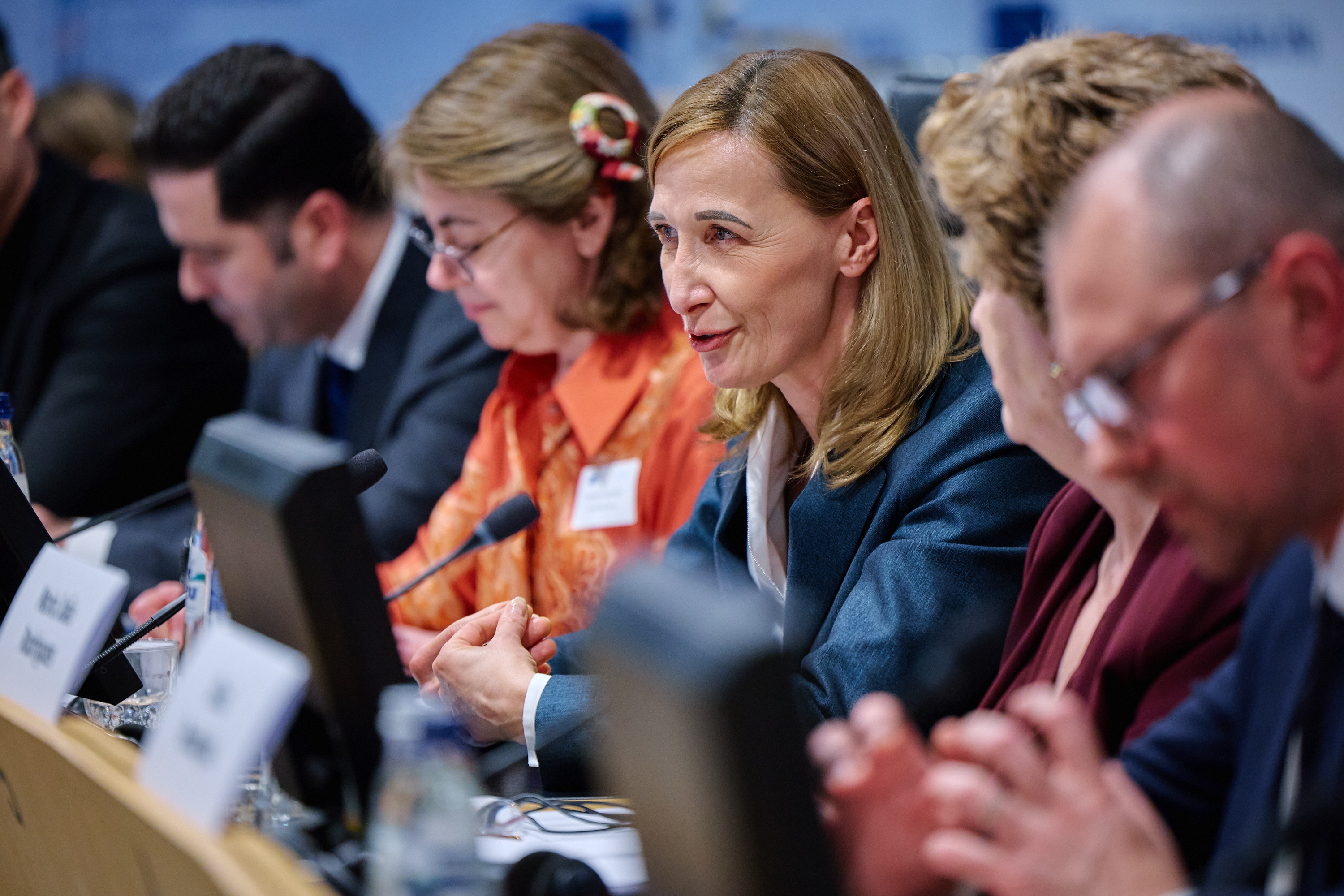
Leaders from major exchanges, including Delphine d’Amarzit, Euronext Paris and Adam Kostyál, Nasdaq Stockholm, noted that most European companies continue to list locally. At the same time, Ivana Gažić, Zagreb Stock Exchange and Miljan Ždrale, EBRD pointed to a persistent “exit gap” in Central and Eastern Europe, where companies are more often sold than scaled through IPOs -despite the significantly higher value creation potential of public listings.

From an investor perspective, Robert Knorr, MidEuropa, described scaling as a complex and capital-intensive process that requires long-term commitment. Gordan Kolak, CEO of Končar Group, emphasized market fragmentation as a major constraint, noting that expansion beyond Europe can sometimes be easier than scaling within it.

Discussions on talent and mindset reinforced similar themes. Marco Janezic, BlueRibbon highlighted access to capital and talent as critical constraints, while Tamara Zajec Balažič, SPIRIT Slovenia, called for a stronger “winning mindset.” Mark Pleško, Cosylab, demonstrated that global capital can be accessed while maintaining European roots, stressing that ambition and execution ultimately determine success.
Carin Knoop, Harvard Business School, pointed to structural differences with the United States, including stronger networks and a greater acceptance of risk. Economist Guntram B. Wolff emphasized that Europe’s core challenge lies in scaling productivity and sustaining growth.

Marta Kos, European Commissioner for Enlargement, framed EU enlargement as both an economic and geopolitical opportunity, bringing new markets, talent, and investment potential. A concluding panel linked enlargement directly to the scale-up agenda, underlining the importance of stronger public and private capital support within Europe’s SME-driven economy.
Blaž Brodnjak, CEO of NLB, added a strong regional perspective, emphasizing that Southeast Europe represents both a growth engine and a strategic opportunity for the European Union. He underscored that EU enlargement, if pursued decisively, could unlock even higher growth trajectories while strengthening economic cohesion, stability, and long-term returns across the Union.

Reflecting on the event, Aart de Geus described it as “a truly unique gathering” and “of previously unseen scope” in his 45-year career, highlighting a growing sense of momentum.
In closing, Stjepan Orešković returned to the central theme of execution. Europe’s strength lies in its entrepreneurs, scientists, and innovators, but progress will depend on alignment and decisive action, and not compromise. He announced the next phase of the Future 500 initiative, including the launch of a data-driven index designed to identify high-potential companies and support a coalition of growth-oriented leaders.
The conference concluded with a clear message: Europe has the foundations - now it must act with greater focus, coordination, and ambition.
Future 500 is a strategic platform developed through the partnership of IEDC – Bled School of Management and the Atlantic Council, dedicated to identifying and supporting European companies with strong global growth potential.
