


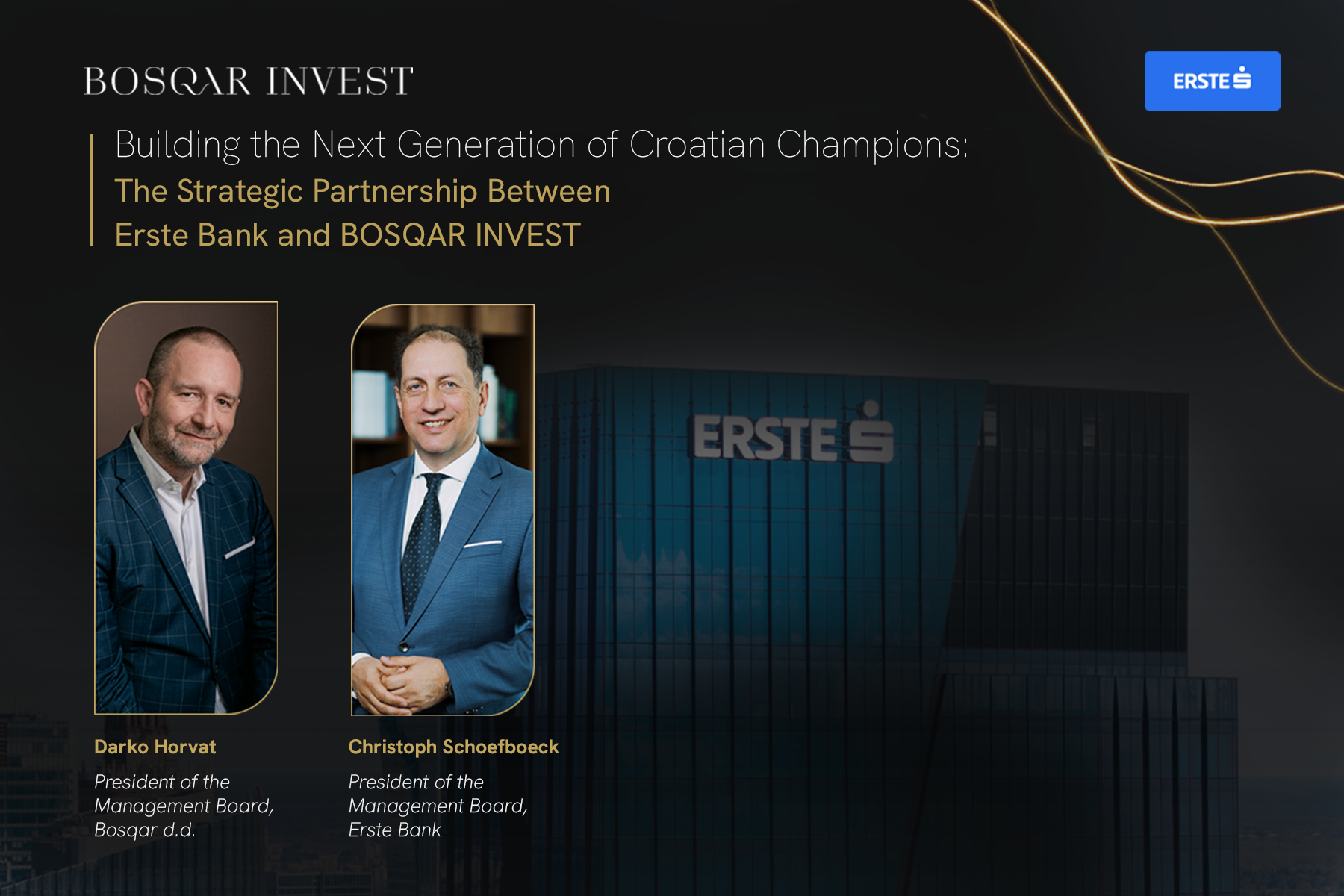
The article is adapted from the original content published by the newspaper Večernji list and translated from Croatian into English.
In recent years, Croatia’s business community has increasingly focused on a fundamental question: how can the country create a new generation of large domestic companies capable of competing beyond national borders?
While discussions about competitiveness, productivity, and investment have become a regular part of economic debate, the number of companies that successfully grow beyond national boundaries and build substantial regional platforms remains relatively limited. Against this backdrop, the way companies finance their growth has become increasingly important.
Particularly noteworthy are examples of businesses that combine traditional bank financing with capital market instruments to support long-term development. One such example is BOSQAR INVEST, a Croatian group that has become one of the country’s most active investors and that views collaboration with financial institutions as an important pillar of its growth strategy.
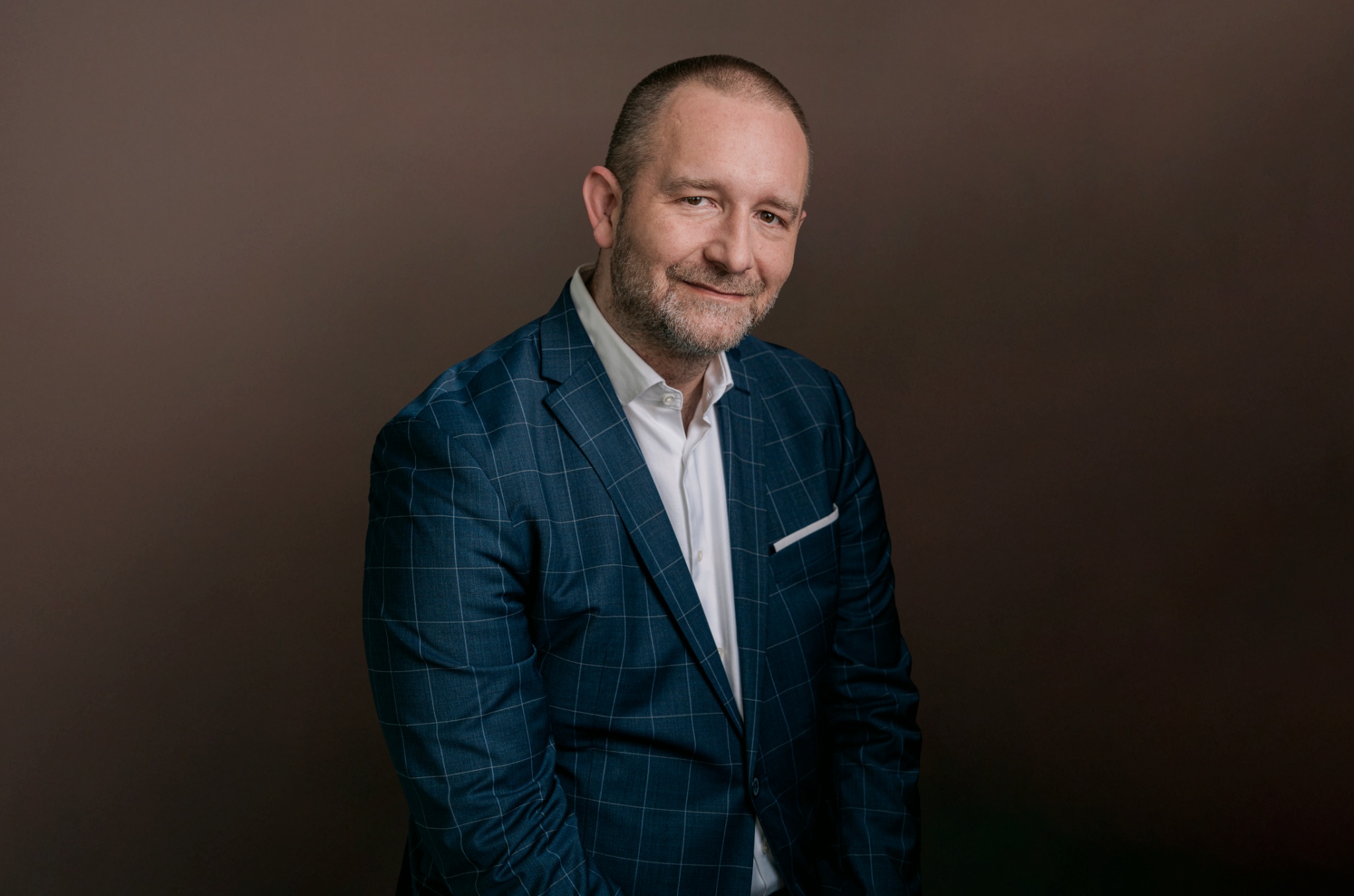
According to Darko Horvat, President of the Management Board of BOSQAR d.d., the role of financial institutions extends beyond the provision of capital.
"When you build a company for the long term, the trust of financial institutions is not merely a matter of financing – it is validation of your business model, strategy, and quality of governance. That trust is not earned overnight. It is built over years through transparency, discipline, fulfilling commitments, and delivering consistent results."
Over the years, BOSQAR has completed several significant capital market transactions. Its cooperation with Erste Bank, through which two bond issuances were successfully executed, continues today through the group’s current Secondary Public Offering (SPO).
According to Horvat, successful transactions are built not only on access to financing, but also on the strength of the relationship between companies and financial institutions.
"The best outcomes are achieved when investors, banks, and companies share a similar vision of long-term value creation. We do not seek capital alone – we seek partners who understand what we are building and who can support us through different stages of growth. The expertise and experience of Erste Bank’s teams have been a valuable source of support for us in some of the most complex capital market processes for many years."
Capital Markets as a Development Tool
Although Croatia’s capital market is often compared with larger and more developed European markets, recent years have brought a gradual increase in interest among domestic companies in alternative financing models.

Christoph Schoefboeck, President of the Management Board of Erste Bank Croatia, believes these developments are encouraging.
"We believe the situation is gradually changing in a positive direction. We are seeing growing interest among Croatian companies in capital market instruments, and as a bank we actively support these trends."
For Schoefboeck, the development of capital markets is important not only for individual companies, but also for the broader economy.
"For certain stages of development and ambitious investment plans, traditional banking products can become limiting, while capital markets provide access to a broader investor base and greater financing flexibility. This is why we view the development of capital markets as one of the key prerequisites for the long-term competitiveness and sustainable growth of the Croatian economy."
Horvat shares a similar perspective. While he believes the Croatian capital market is considerably more developed today than it was a decade ago, he also sees room for further progress.
"The biggest challenge is not a lack of capital, but the number of companies willing to open themselves to investors and embrace the standards that capital markets require. Such a step demands a certain level of organizational maturity and courage, but in the long run it brings numerous advantages."
From Financing to Strategic Partnership
As the business environment becomes increasingly complex, the role of banks is evolving alongside it.
Today, financial institutions are not only providers of capital, but increasingly strategic partners that help companies structure growth, manage risks, and plan future investments.
"I see the role of banks as much broader than traditional financing. Today, it involves active partnership in the development of companies. Banks are uniquely positioned to connect capital, expertise, and market insights, helping businesses make better and more sustainable long-term decisions. We see BOSQAR INVEST as a partner with a consistent approach to value creation across different market cycles. Its key strengths include experienced management, a clearly defined growth strategy, and a diversified business model," Schoefboeck said.
These qualities become particularly important in complex transactions involving multiple stakeholders and different sources of financing.
"Projects of this kind are ultimately about people and trust. When you work with the same partners across multiple transactions, the relationship grows beyond the traditional business framework. In demanding and dynamic situations, the quality of people, the speed of execution, and mutual trust become decisive factors for success."
Food Industry as a Strategic Sector
One of BOSQAR INVEST’s most important strategic growth directions in recent years has been the food industry.
Following the acquisitions of Mlinar and Panvita, the company recently signed an agreement to acquire 100 percent of PIK Vrbovec, one of Croatia’s leading food companies.
According to Horvat, the potential integration of PIK Vrbovec would represent an important milestone in the development of BOSQAR’s Future Food vertical.
"We see PIK Vrbovec as one of the most important food companies in Croatia. It is a company with a highly recognizable brand, a long tradition, and significant production capacities. That is why we believe its inclusion in our Future Food vertical would represent an important step not only for BOSQAR, but also for the development of the regional food industry."
Based on publicly available 2024 data, the combination of Panvita, Mlinar, and PIK Vrbovec would create a food platform with approximately EUR 640 million in revenue and around 4,800 employees.
"This would further strengthen our farm-to-table model and create a leading regional fresh-food platform, while contributing to food security and supply-chain resilience in Croatia and the wider region," said Horvat.
While individual transactions are often viewed primarily through a financial lens, their significance frequently extends beyond the companies involved.
At a time marked by geopolitical uncertainty, supply-chain disruptions, and an increasing focus on economic resilience, the question of how domestic companies finance growth has become closely linked to the long-term competitiveness of entire economies.
The experience of BOSQAR INVEST demonstrates how combining capital market instruments, banking expertise, and long-term strategic partnerships can support the creation of larger and more resilient regional business platforms. As Croatian companies continue to pursue new growth opportunities, collaboration between businesses, investors, and financial institutions will remain one of the key drivers of sustainable economic development.